
A used car should be chosen based on three factors at once: the asking price, the cost of running it over the coming years, and whether it will remain compatible with increasingly strict driving restrictions. Ignoring any one of these factors simply pushes the budget problem further down the road. France’s used-car market offers a wide choice of affordable models, but the purchase price alone says very little about what a vehicle will actually cost.
Crit’Air sticker and LEZs: check before buying a used car
Before comparing listings, make sure the car you’re considering can be driven where you need to go. Low-emission zones (LEZs) now cover several local authorities in France, and their rules are not consistent. Restrictions, operating hours and exemptions vary from one city to another.
A car with a Crit’Air 3 rating or higher may seem affordable to buy. But if your daily journeys take you through an LEZ, that bargain can quickly become a major constraint.
Changes are planned in some LEZs in 2027. Awareness-raising periods are due to end in several cities, after which penalties may apply. In Strasbourg, a proposed delay to the announced restrictions has yet to be confirmed. If you’re buying a car to keep for several years, check the local order and its timeline rather than assuming the rules are the same nationwide.
Specialist platforms let you filter listings by engine type and LEZ compatibility. Some, such as https://www.declicauto.fr, bring together used vehicles and provide detailed information on each model.

Used-car budget: calculate the true cost beyond the purchase price
The natural instinct is to set a purchase-price limit and look for the best car below it. This approach ignores half the equation. The total cost of ownership includes fuel, insurance, routine maintenance, repairs and remaining depreciation.
Maintenance, repair and parts costs rose in 2024, while France’s vehicle fleet continues to age. A car listed at a low price but with hard-to-find parts or expensive servicing can end up costing more than a pricier model that requires less maintenance.
Set aside a buffer for unexpected mechanical repairs
The most protective rule is simple: keep at least ten to fifteen percent of your total budget aside for unexpected repairs. The clutch, timing belt or electronics could fail in the months after purchase, even if the car appears to be in good condition.
Comparing maintenance invoices for two similar listings gives you a more reliable indication than comparing asking prices. A seller who provides a complete service history with dated invoices offers a level of transparency that the cheapest listing with no supporting documents cannot.
HistoVec and mechanical inspections: what each check really covers
HistoVec is a free service that lets you check the administrative history of a used vehicle. It can help verify details such as mileage readings from roadworthiness tests and the vehicle’s administrative status. It is genuinely useful, but its limitations are often misunderstood.
- HistoVec does not provide information about maintenance carried out by the owner or the current condition of the engine or transmission.
- Recorded claims are those that led to a repair process overseen by an expert. Some accidents may not appear in the report.
- A HistoVec report with no alerts does not replace asking the seller questions or physically inspecting the vehicle. Treat it as a partial check, not a guarantee that there are no problems.
To complete your checks, always ask for the service history and repair invoices, and consider arranging an independent inspection before signing. A recent roadworthiness test is the minimum, not the maximum.
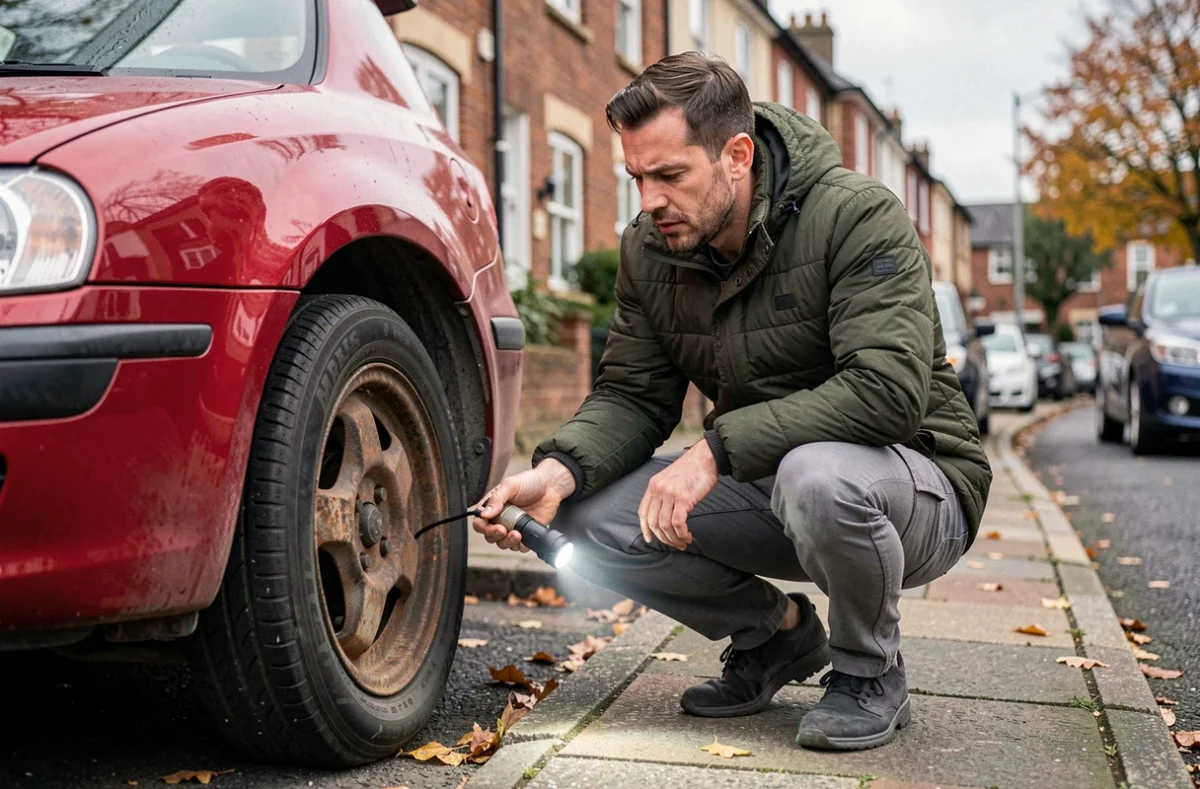
Choose the right used car for your journeys and fuel consumption
Your choice of engine depends directly on how you actually use the car. A diesel can still make sense for regular long-distance journeys, but its Crit’Air rating may be an issue in urban areas. A recent petrol engine (Crit’Air 1) offers a better balance for a mix of city and highway driving, while remaining compatible with most current and upcoming LEZs.
Three practical criteria for choosing between two models
- Real-world fuel consumption (not the manufacturer’s figures): check owner feedback on specialist forums for the exact model, year and engine.
- Average cost of wear-and-tear parts (brake pads, filters, belt): widely available models such as the Renault Clio, Peugeot 208 and Dacia Sandero benefit from affordable parts and a large network of repair shops.
- Estimated resale value after three or four years: a model that holds its value can partly offset the initial purchase cost.
A well-chosen used car is not the cheapest one on the market. It’s the one whose purchase price, fuel consumption, expected maintenance costs and LEZ compatibility make sense for your actual journeys and your budget over time.
One final point to keep in mind: a documented service history is just as protective as low mileage. A car with 120,000 km and a meticulous service record is less risky than one with 60,000 km and no invoices. The vehicle’s records often tell you more than its odometer.