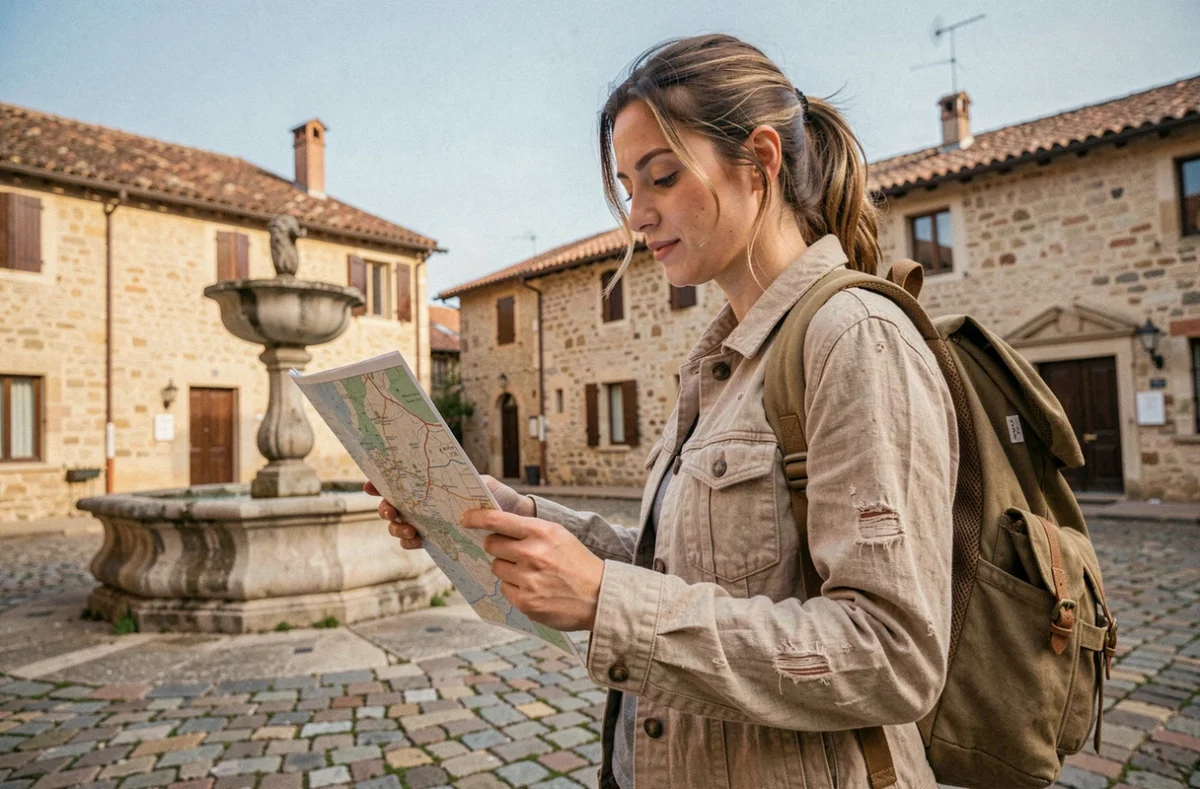
Taking a plane ticket to the other side of the world is no longer the only way to experience a strong change of scenery. In France and across Europe, routes accessible by train or bike offer experiences as impactful as a long-haul flight. The issue is no longer about choosing between traveling and giving up, but about rethinking what we truly expect from a getaway.
Carbon intensity per visitor: the criterion that brochures don’t mention
The Réseau Action Climat suggests complementing the classic tourism indicators (arrivals, overnight stays, revenue) with four more meaningful criteria: carbon intensity per visitor, benefits for the local economy, preservation of the living environment, and affordability. This framework changes the way to compare two destinations.
In practical terms, a week in a rural gîte in the Basque Country accessible by TER does not have the same climate cost as a weekend in Marrakech on a low-cost flight, even if the latter option is cheaper on the bill. Comparing solely based on price ignores part of the real balance.
The French tourism policy still favors promotion to non-European clients, which the Réseau Action Climat describes as a climate deadlock. The organization recommends focusing more on French and European clients, accessible by train or car. To prepare itineraries that take these constraints into account, platforms like allers-retours.fr allow for structuring journeys by prioritizing land transport modes.
This change in perspective is not just a theoretical exercise. The European directive (EU) 2024/825 strengthens the control of ecological claims in the tourism sector. An accommodation claiming to be “green” without verifiable proof is subject to penalties. Before booking, checking for the presence of a recognized label (European Ecolabel, Green Key) becomes a useful reflex.

Biking or hiking in France: choosing your route based on terrain and season
Have you noticed that the same cycling route can be a family outing in June and a sports challenge in August under the heat? The choice of period matters as much as the route.
The French bike routes cover a dense network, from the Atlantic coast to the Alpine passes. Two approaches coexist: multi-day itinerant travel (like Loire à Vélo or Canal du Midi) and short loops from a fixed point, ideal for a weekend.
Concrete criteria for choosing a route
- Cumulative daily elevation gain: below 300 meters per day, the route remains accessible to an occasional cyclist with panniers. Beyond that, prior training or an electric bike is necessary.
- Availability of accommodations along the way: some rural sections offer neither gîtes nor campsites over long stretches. Checking the stages before departure avoids unplanned bivouacs.
- Exposure to wind: on the west coast, prevailing winds blow from the northwest. Cycling from north to south makes the journey significantly more comfortable than the reverse.
- Train access with a bike: not all TER lines accept non-dismantled bikes. The regions of Brittany, Nouvelle-Aquitaine, and Occitanie offer the best carrying capacities.
For hiking, the GR trails offer varied landscapes, from the Breton coastal heritage to the Vosges ridges. A well-chosen GR can easily replace a trip abroad in terms of change of scenery. The GR 34 in Brittany or the GR 10 along the Pyrenees traverse landscapes that many travelers seek much further away.
Traveling differently abroad without flying: rail options in Europe
Night trains are gradually returning to European lines. From France, direct connections or with a transfer allow you to reach Spain, Italy, Germany, or Austria without going through an airport.
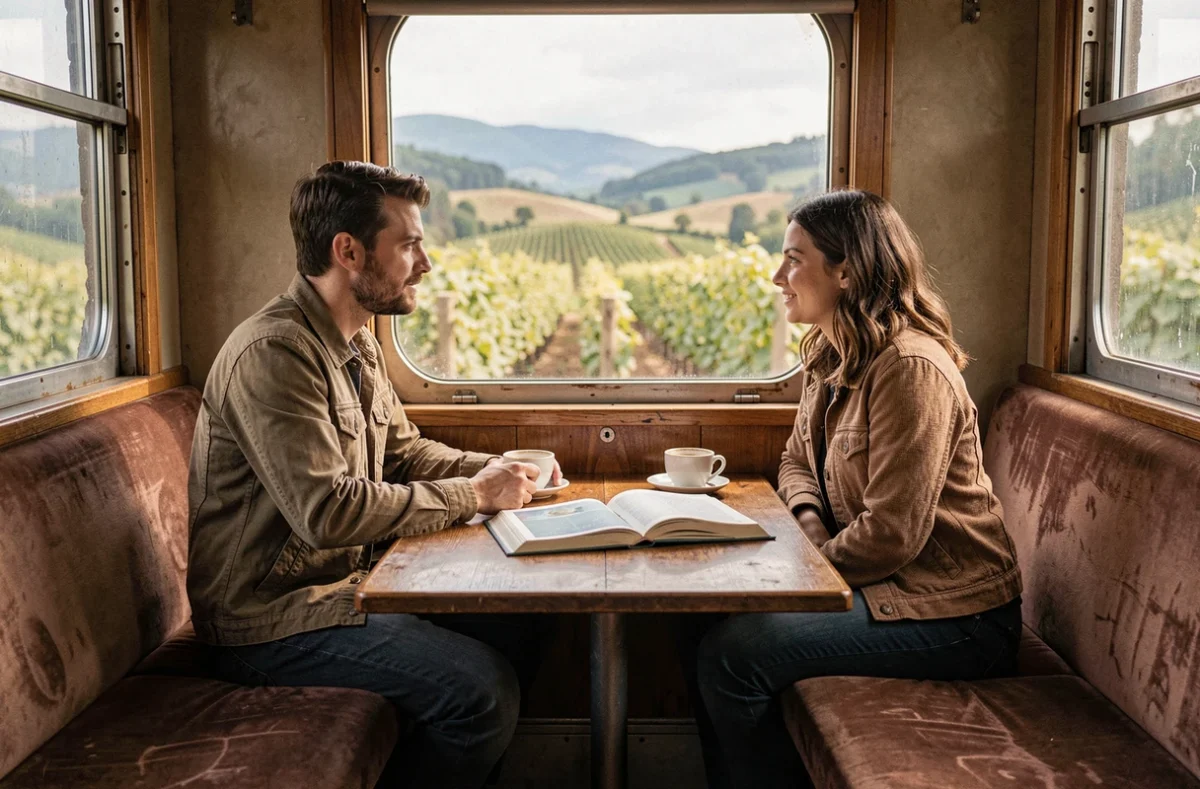
Why choose this option over a low-cost flight? The train journey is part of the trip, not wasted time. A night train from Paris to Barcelona drops you in the city center in the morning, without security lines or transfers from a remote airport. The “lost” time in transport turns into rest time.
Destinations accessible by train from France
Northern Italy (Turin, Milan, the lakes) can be reached in a few hours from Lyon. Switzerland, southern Germany, and Belgium remain within reach of TGV or Intercity. For the islands, the combination of train plus ferry works well to Corsica (train to Nice or Marseille, then crossing), Sardinia, or the Balearics.
The main issue remains the price. A train ticket booked early often costs the same as a low-cost flight. Booked at the last minute, it can cost double. Planning four to six weeks in advance significantly reduces the rail budget.
Local ethical codes and proximity tourism: what is changing concretely
More and more municipalities and natural sites are establishing codes of conduct for visitors. This phenomenon, documented by several tourism observatories, responds to growing pressure on certain locations.
These rules are not always legally binding, but they reflect a change in the relationship between residents and visitors. Respecting marked paths in the calanques, limiting noise in the evening in a mountain village, or not parking outside designated areas is common sense, but these reminders become necessary in high-traffic areas.
The social critique of tourism in France no longer solely focuses on the environment. The rise in property prices linked to seasonal rentals reduces vacation accessibility for local households. Traveling differently also means choosing accommodations that benefit the local economy rather than centralized platforms: municipal gîtes, guest rooms run by locals, municipal campsites.
A stay planned with this perspective does not necessarily cost more. It mainly requires preparation in advance, taking the time to identify local players, check labels, and plan movements without systematically resorting to cars or planes. The gain is measured less in saved euros than in the quality of the experience lived.