
The transfer in the gendarmerie follows a logic specific to military status, summarized by the phrase “serve at all times and in all places.” Every year, thousands of gendarmes change their assignments, sometimes moving to a different department, sometimes to another country. However, the timeline for these movements remains unclear for many military personnel, including those actively preparing their requests.
Between the Annual Transfer Plan (PAM), priority criteria, and the realities on the ground, the timelines vary significantly depending on the applicant’s profile and the intended destination.
Gendarmerie Transfer: A Schedule Dictated by the PAM and Service Needs
The PAM structures all personnel movements for the upcoming year. Requests are made during an annual campaign, usually at the end of the calendar year, for effective assignments the following summer. This cycle imposes a rigid tempo: a gendarme who misses the submission window will have to wait another year.
The final decision rests with the command, which mediates between individual wishes and vacant positions. A gendarme assigned to a high-tension area (the national gendarmerie zone covering most of the territory) will have less chance of leaving quickly than another posted in an overstaffed unit. Service needs systematically take precedence over personal preferences.
To understand the timeline for a transfer in the gendarmerie, it is essential to distinguish between two situations. An involuntary transfer, decided by the hierarchy for operational reasons, follows a constrained schedule and leaves little room for flexibility. A voluntary transfer, initiated by the gendarme, depends on priority criteria (spousal proximity, family situation, seniority in the position) and the availability of a position compatible with the rank and specialty.

Why Transfers to Attractive Regions Take Longer
Not all destinations are equal in terms of waiting time. Coastal regions, southern France, and overseas territories see high demand. Comfort transfers to these areas have experienced longer wait times since 2022, due to the low vacancy of positions and the persistent attractiveness of these assignments.
This phenomenon, mentioned in internal communications and on gendarme forums, remains poorly documented in official guides. Field feedback varies on the exact extent of the problem, but the trend is clear: aiming for the French Riviera or Brittany without a priority reason can mean several PAM cycles of waiting.
In contrast, requests motivated by spousal proximity or recognized family situations benefit from expedited processing. A solid priority reason significantly reduces waiting time, sometimes by one or two complete cycles. The regulatory framework protects these situations, but it is still necessary to compile a well-supported file and submit it within the allotted time.
Ten-Year Career Strategy: The Lever That Few Gendarmes Anticipate
The choice of assignments at the beginning of a career has a direct impact on the ability to obtain a desired transfer later on. This mechanism operates according to an informal but very real logic of “mobility capital” within the institution.
Accepting Difficult Positions Early On
A non-commissioned officer who accepts a first assignment in a priority security zone, in an isolated unit, or overseas accumulates several advantages. They meet the seniority criteria in a less sought-after position, which gives them a better ranking in subsequent arbitrations. They also demonstrate their availability to the command, a factor that weighs in decisions.
Choosing a demanding position during the first five years opens doors that comfortable assignments do not allow. Gendarmes who go through two positions in a tense area find themselves in a strong position to request a transfer to an attractive region, with a file that the hierarchy has little reason to refuse.
Specializing to Broaden Transfer Options
Specialization (criminal identification technician, dog handler, specialized investigator, trainer) creates targeted needs in specific units. A specialized gendarme applies for positions with low competition, where a generalist competes with dozens of candidates.
- Qualifying training (criminal identification, intervention, intelligence) allows access to specific units spread across the territory, including in regions usually saturated with requests
- Passing through a recognized training center enhances the career path and provides access to targeted positions, for which the pool of qualified candidates remains limited
- Experience in external operations or protection missions adds a distinctive criterion to the file, often taken into account during arbitrations between equivalent applications
A career built on specialization shortens the transfer timeline because it transforms the gendarme into a sought-after resource rather than just another applicant.
Appeals and Acceleration: What the Regulatory Framework Really Allows
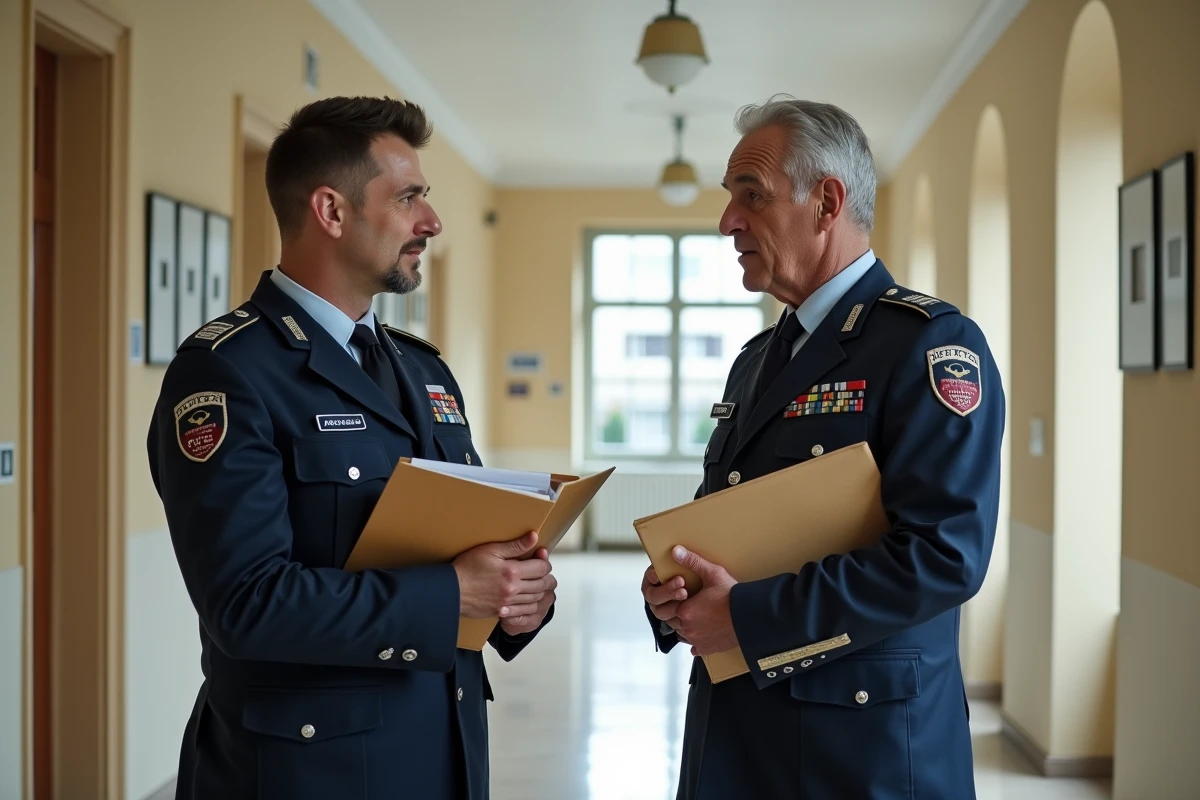
When a transfer request is denied or ignored, the gendarme has avenues for appeal. The preliminary administrative appeal to the military appeals commission constitutes the first step. This process, governed by the general military status, allows contesting a transfer decision deemed unjustified.
Cases of spousal proximity receive special protection. The command is required to prioritize requests related to family life, even if there is no formal obligation for results. A refusal motivated solely by service needs, without a real examination of the personal situation, can be contested.
Several concrete levers can help accelerate the process:
- Submit the request as soon as the PAM campaign opens, with a complete file including proof of family situation and a favorable opinion from the company commander
- Request a meeting with the regional human resources office to learn about vacant positions corresponding to the rank and specialty
- Target multiple compatible destinations rather than a single position, which increases the chances of being included in favorable arbitrations
- Maintain regular contact with the prevention assistant or mobility referent of the unit to track the progress of the file
Proactivity in compiling the file makes the difference between a request that succeeds in the first cycle and one that stagnates. The administrative framework offers tools, but their effectiveness largely depends on the diligence with which the gendarme utilizes them.
A transfer in the gendarmerie remains a process where patience and strategy count as much as rights. Gendarmes who build their career with a medium-term vision, accepting constrained mobility before requesting a chosen assignment, achieve results that mere seniority does not guarantee.