
An interior design project in Rennes raises a question rarely asked in advance: should we first rethink the volumes or address the technical constraints of the building? The answer depends on the type of housing, its energy classification, and local regulations. Comparing the approaches allows us to measure what professional support concretely changes in the final result and in the budget.
Regulatory Constraints in Rennes: EPC, Protected Areas, and Old Condominiums
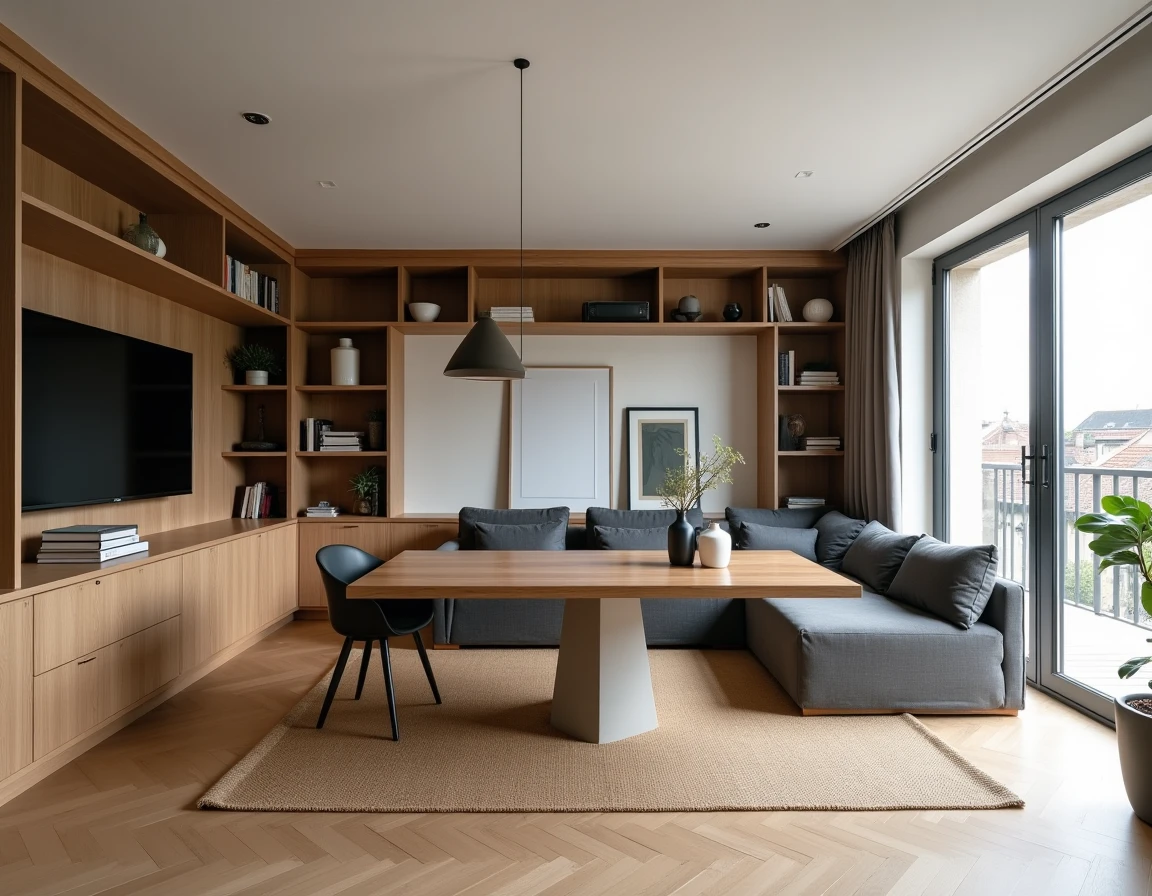
The Rennes metropolitan area has particularities that complicate any remodeling project carried out without technical expertise. The city center concentrates buildings in protected areas, subject to strict rules regarding facade materials, joinery, and sometimes even the interior configuration itself.
Additionally, there is the pressure of the opposable energy performance diagnosis. Since the tightening of the rental ban schedule for properties classified F or G, many Rennes homeowners must completely rethink the configuration of their property: reorganization of rooms, integration of internal insulation, replacement of joinery.
A interior design agency in Rennes that understands these local constraints integrates the aesthetic aspect with administrative requirements from the design phase, which avoids costly revisions after the permit or prior declaration has been validated.
Custom Design in Rennes: Comparison of Approaches Based on Project Type

Not all projects require the same skills. The table below distinguishes three common scenarios in the Rennes metropolitan area and the concrete differences between autonomous management and support from a specialized agency.
| Type of Project | Autonomous Management | With Design Agency |
|---|---|---|
| Renovation of an apartment classified F or G | Risk of non-compliance with EPC after work, fragmented coordination of artisans | Integration of insulation and layout in a single plan, anticipated compliance with RE2020 |
| Kitchen or bathroom renovation in an old condominium | Charge constraints, evacuations, and condominium regulations often discovered during the project | Preliminary technical diagnosis, execution plans adapted to structural constraints |
| Creation of a dressing room or reorganization of the living room in a recent house | Result often satisfactory if the owner masters the volumes | Gain in usable space through optimized circulation, 3D design to validate choices |
In the third case, the gap between the two approaches is the smallest. However, as soon as the building presents structural or regulatory constraints, technical coordination alone justifies the use of a professional.
Energy Renovation and Interior Design in Rennes: A Structuring Link
Energy renovation is no longer a separate aspect of design. In the Rennes metropolitan area, more and more projects integrate strong requirements for internal insulation, treatment of thermal bridges, and the choice of bio-sourced materials.
This convergence is explained by programs like MaPrimeRénov’ and ANAH aid, which have been further strengthened since 2024. A project that combines room reorganization and thermal improvement can access funding that purely decorative work does not unlock.
- Internal insulation reduces the living space: a design plan must incorporate this loss from the outset to avoid an undersized living room or kitchen after the work.
- Replacing joinery in a protected area requires models approved by the Architect of the Buildings of France, which influences material choices and timelines.
- High-performance ventilation systems (double-flow VMC) require anticipated duct routing in the layout plan, especially in old apartments where the false ceiling is limited.
An interior architect who ignores these thermal constraints produces an aesthetically coherent plan but technically incomplete. Conversely, a thermal study office alone does not consider daily usage. The interior design agency bridges the two areas of expertise.
Custom Design: How 3D Visualization Changes a Project in Rennes
Photorealistic 3D modeling has changed the way design projects are decided. For a Rennes apartment of type T3 with atypical volumes (sloped ceilings, stone walls, exposed beams), a 2D plan is not sufficient to anticipate the impact of a custom piece of furniture or a relocated partition.
Visualization allows testing multiple configurations before launching any construction work. For an open kitchen to the living room, for example, it makes visible the effect of a central island on circulation and natural light.
What distinguishes an agency equipped with a private individual using consumer software is the ability to overlay technical constraints (networks, load-bearing structure, ventilation) on the visual rendering. A 3D plan without technical data remains a decorative image, not a decision-making tool.
Custom Furniture and Space Optimization
Custom furniture (dressing rooms, bookshelves, integrated storage) makes the best use of the irregular volumes common in old Rennes buildings. Design assisted by a professional ensures that each element fits the actual dimensions of the housing, measured after the removal of coverings if necessary.
For a dressing room in the eaves or a long bathroom, the difference between a standard piece of furniture and a site-specific design is measured in centimeters of storage gained and in daily comfort of use.
The choice between autonomous management and professional support ultimately depends on the building. In a recent property with regular volumes, autonomy works. As soon as the project encounters thermal, administrative, or structural constraints specific to the Rennes real estate market, the technical coordination of a specialized agency reduces the risks of rework and additional costs.