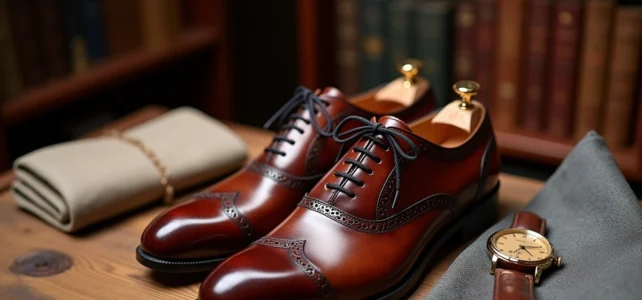
A high-end men’s shoe is primarily defined by its construction: a stitched assembly (Goodyear, Blake, or Norwegian), full-grain leather selected from tanneries, and a shape designed to fit the anatomy of the foot. These three technical criteria separate a durable shoe from a glued product that deteriorates after a few months.
Cost per wear: why a high-end pair replaces several average pairs
The common reflex is to buy two or three moderately priced pairs instead of one high-quality pair. The calculation seems logical, but it overlooks a decisive factor: the actual lifespan relative to the number of wears.
A full-grain calf leather shoe made with Goodyear stitching can be resoled multiple times. The upper, if nourished and protected, retains its shape for years. An entry-level glued pair, on the other hand, cannot be repaired: when the sole detaches or the leather cracks, the shoe is lost.
When calculated based on the number of days worn, the actual price of a high-end shoe often falls below that of a cheap pair replaced every year. This reasoning by cost per wear transforms what seems like an expense into a modest investment, naturally guiding one towards high-end men’s shoes designed to last.
Versatility also plays a role: a well-designed dark smooth leather derby transitions effortlessly from a suit to chinos. With a single well-chosen pair, the wardrobe gains coherence instead of scattering among several mediocre models.
Stitched construction and full-grain leather: the technical criteria for a durable shoe
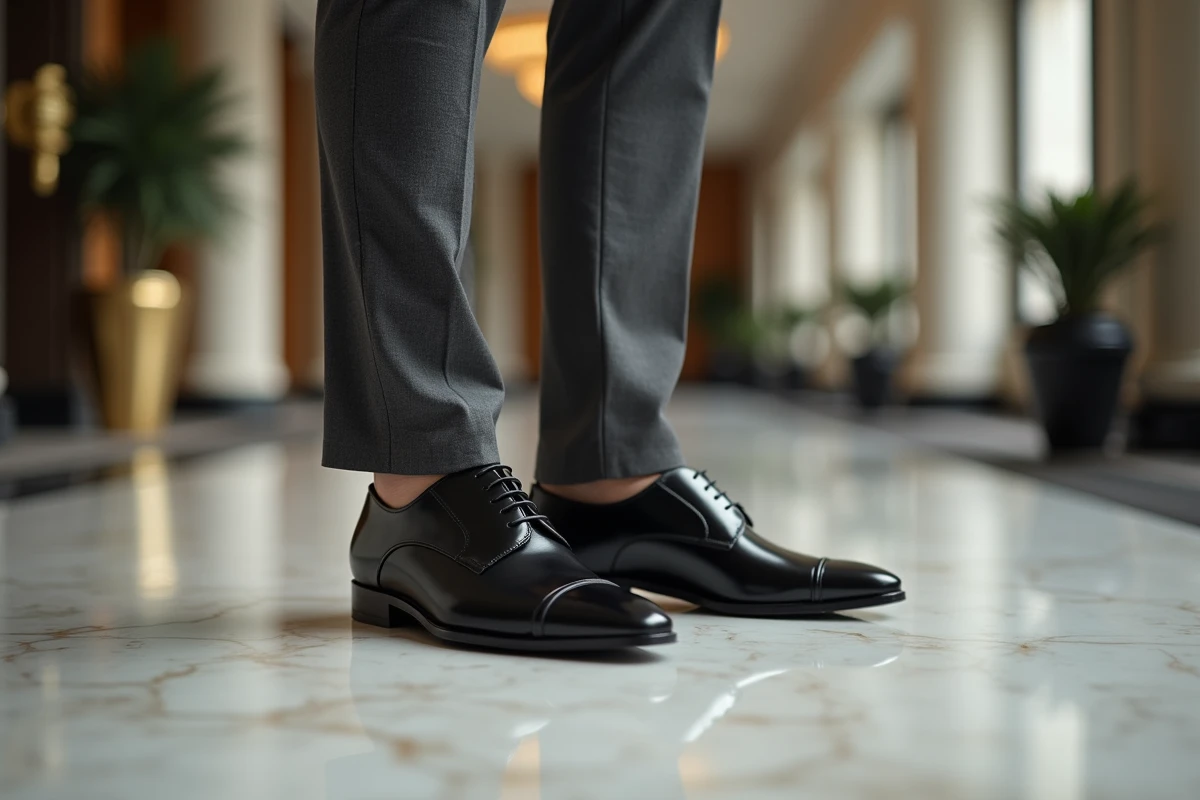
Not all shoes sold as “high-end” truly are. Two technical elements allow for a quick verification of the actual quality of a pair.
The stitched assembly
The Goodyear stitching connects the upper, the welt, and the outsole with a continuous stitch. This process allows for resoling and guarantees superior waterproofing compared to gluing. The Blake stitch, finer, offers an elegant silhouette but is less amenable to repair.
The Norwegian assembly, recognizable by its visible external stitching, adds extra robustness. It is suitable for more casual models like thick-soled derbies.
Full-grain leather
Full-grain leather retains the top layer of the dermis, which has the finest grain and the best durability. Corrected leather (sanded and then coated) hides defects but ages poorly and develops a patina with difficulty.
Aniline calf leather, dyed without opaque pigment, reveals the material in its natural state. Its transparency makes each pair slightly unique, which explains the rigorous selection of hides from reputable tanneries.
Preventive leather care: the ritual that extends lifespan
Buying a good shoe without maintaining it is akin to ignoring half its value. Cobblers and leather specialists emphasize a protocol to be followed from day one.
- Immediate waterproofing: even before the first wear, a protective spray creates a barrier against moisture and stains, on smooth leather as well as nubuck or suede.
- Cedar shoe trees inserted after each use: they absorb residual moisture, maintain the shape, and limit creasing.
- At least twenty-four hours between wears: leather needs to dry completely to avoid deformation or developing unpleasant odors.
- Regular application of polish or nourishing cream to rehydrate the leather and maintain the patina.
This ritual may seem cumbersome, but it takes just a few minutes. Regular maintenance doubles the lifespan of a stitched shoe, further reinforcing the cost per wear advantage mentioned earlier.
Men’s shoes and level of formality: adapting the model to the outfit
The versatility of a high-end shoe does not mean that a single model suits all situations. The choice depends on the structure of the shoe and the intended dress code.
The oxford (richelieu), with its closed lacing, remains the most formal model. It accompanies suits and formal attire without competition. The derby, with open lacing, is a step down in formality and pairs well with both dress pants and raw denim.
The coherence between shoes and belt remains the basic rule of the men’s wardrobe: same shade of leather, same level of finish. This detail, often overlooked, visually anchors the outfit.
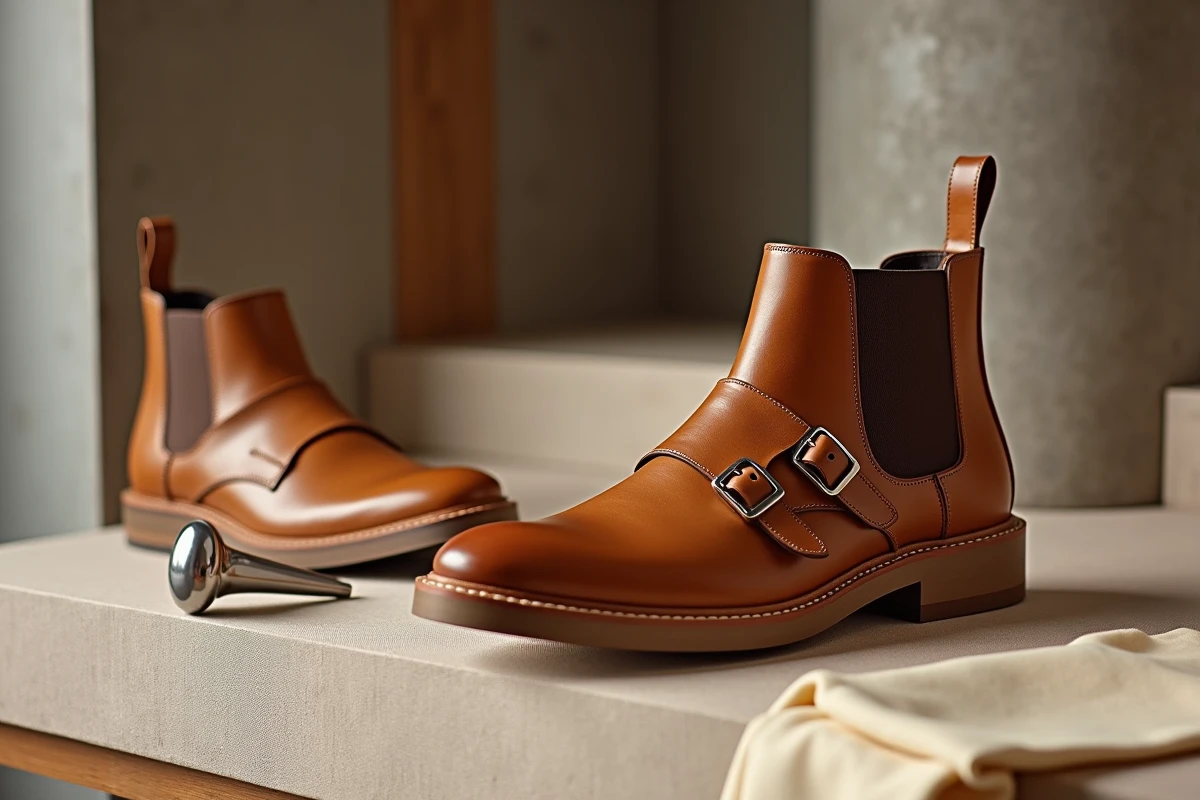
For more casual contexts, a structured leather ankle boot tempers a strong outfit. Conversely, a streamlined model (few visible stitches, smooth toe) is suitable when the rest of the look is rich in textures or colors.
Comfort and fitting: an underestimated technical point
A poorly fitted high-end shoe loses all its appeal. Specialists recommend trying them on at the end of the day, when the foot has slightly swollen, to achieve a realistic fit.
The internal shape (arch, width at the metatarsals, heel support) is as important as aesthetics. A quality leather molds around the foot after a few wears, but the basic structure must match the morphology from the first fitting.
Choosing a pair that combines stitched construction, full-grain leather, and a shape suited to one’s foot, then maintaining it according to a simple protocol, is the most cost-effective approach to building an elegant men’s wardrobe over time. The shoe then becomes the piece around which the rest of the outfits are organized, without unnecessary multiplication of interchangeable pairs.