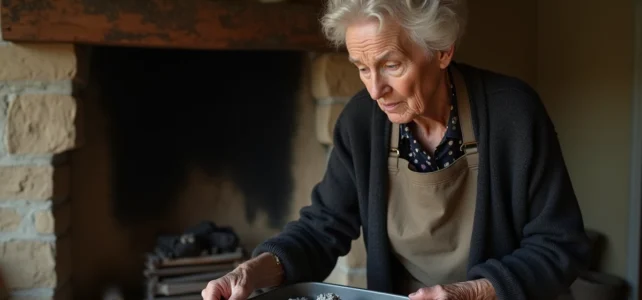
Collecting the ashes of a deceased person to keep at home evokes a vague discomfort, often framed as a superstition. This fear of misfortune associated with having ashes in the home is based on a mix of religious rites, funeral legislation, and psychological mechanisms related to mourning. Understanding the origins of this belief requires untangling what pertains to the sacred, the law, and emotions.
Ashes at Home: What Religions and the Law Say
The perception of misfortune linked to ashes kept at home varies significantly depending on the frame of reference. The table below contrasts the positions of the main traditions and French law.
| Frame of Reference | Position on Ashes at Home | Basis of the Belief or Rule |
|---|---|---|
| Catholicism | Formally discouraged | Ashes must rest in a sacred place, not at home |
| Hinduism | Not practiced (dispersal preferred) | The rite of dispersal in water liberates the soul from the cycle of rebirth |
| Buddhism | Variable depending on the schools | Some schools accept conservation, others discourage it |
| Judaism | Cremation itself is generally discouraged | The body must return to the earth; cremation poses a problem beforehand |
| French Law (law of December 19, 2008) | Prohibited | Ashes have a legal status of remains, not personal property |
What stands out in this comparison is that the superstition of misfortune does not have a single source. It aggregates disparate religious prohibitions and a recent legal norm that transforms a matter of belief into a matter of legal compliance.
To delve deeper into the cultural dimension and variations of this belief, you can consult the advice from Senior Cybernet which details several regional traditions surrounding funeral rites.
Funeral Superstitions and Ashes: A Legacy of Ancient Rites
The fear of keeping ashes at home does not arise in a vacuum. It is part of a larger set of superstitions related to funerals and the presence of the dead among the living.
In many cultures, the body of the deceased must leave the realm of the living permanently for the passage to the afterlife to be completed. Keeping ashes at home symbolically prevents this departure. It is this unfinished break that fuels the idea of misfortune.
Parallels with Other Superstitions Surrounding Burial
The fear associated with ashes resonates with other widespread funeral beliefs around the world:
- The throwing of rice at a wedding or ceremony serves a symbolic function to purify and protect the living from contact with spirits, a gesture of separation between the two worlds
- In some countries, opening windows at the time of death allows the soul to leave the house, and closing them too quickly would bring misfortune to the family
- The belief that one should never bring flowers from a cemetery back home is based on the same logic: what belongs to the realm of the dead must remain there
The common thread of these rites is the clear separation between the living and the deceased. Keeping ashes at home violates this symbolic boundary, which is enough to trigger a feeling of transgression.
Ashes at Home and the Mourning Process: The Psychological Barrier
Beyond superstitions, keeping ashes at home poses a problem documented by grief professionals. Keeping the urn at home can slow down the necessary process of separation after a death.
Psychologist Josée Jacques notes that this practice, while it may be reassuring in the weeks following the death, becomes problematic when the bereaved maintains an almost living relationship with the urn. The risk is that the presence of the object substitutes for reinvestment in new activities or relationships.
When Perceived Misfortune is Actually an Emotional Block
What many interpret as “misfortune” after collecting ashes often corresponds to symptoms of prolonged mourning: difficulty resuming a social life, feelings of guilt about moving the urn, tensions within the family regarding the fate of the remains.
The superstition here acts as a disguised alert signal. Saying “it brings misfortune” is a socially acceptable way to express discomfort that the psychology of grief describes in more precise terms: the inability to let go.
Funeral Law in France: Why Ashes Are No Longer a Private Object
The legal dimension has profoundly altered the question. Before the law of December 19, 2008, French families could keep ashes at home without violating any rules. This law changed the status of ashes by granting them the same legal protection as a body.
The respect owed to the human body does not cease with death. Ashes are part of the remains of the deceased and must undergo a funeral fate: burial in a cemetery, placement in a columbarium, or dispersal in an authorized space.
Practical Consequences for Families
Keeping ashes at home has become an offense. This legal framework has had an unexpected effect on beliefs: the law has reinforced the superstition by giving it institutional legitimacy. What was once a diffuse cultural taboo has transformed into an official prohibition, making the fear of “misfortune” more tangible for families.
- Ashes must be placed in a collective memory site (cemetery, columbarium, garden of remembrance)
- Dispersal is possible in nature, away from public roads, with a declaration to the town hall
- Sharing ashes among several family members is prohibited, which cuts short certain practices of partial conservation
This legislation places France among the strictest countries regarding the fate of ashes. In contrast, in countries like the United States or Canada, keeping ashes at home remains legal, which shows that the notion of misfortune is culturally constructed, not universal.
The belief that collecting ashes brings misfortune rests on three distinct layers: a legacy of ancient funeral rites that separate the living from the dead, a psychological mechanism of unresolved grief, and a legal framework that has transformed a taboo into a prohibition. None of these layers demonstrate a link between the presence of ashes and any factual misfortune. The discomfort is real, but it speaks more to our relationship with death than to the ashes themselves.